The 993 family
The first decision in a 993 search is often a silhouette. Perhaps it is the slim rear of a Carrera, the fuller arches of a 4S, or the fixed wing of a Turbo. Those preferences matter: this is a car you should enjoy seeing in the garage as much as driving. Understanding what sits beneath that shape gives the search a firmer foundation.
The 993 was the final air-cooled 911 generation, built from 1993 to 1998. Its range developed over that period, so a launch date, model year and first registration can describe different moments in a car’s history. Porsche’s international model chronology begins with model year 1994; the U.S. introduction was for model year 1995. Confirm a candidate’s market specification and identity before comparing it with another car. Porsche’s generation history and the Porsche Club of America’s 993 model guide provide useful context.
The photographs below identify the main road-going variants. Individual cars may have replacement wheels or other changes; the pictures illustrate the models, rather than certify factory originality.
Our approach is to separate five decisions: body style, driven wheels, engine, transmission and individual condition. A desirable badge can help describe the first four. It cannot answer the fifth.
Carrera and Carrera 4
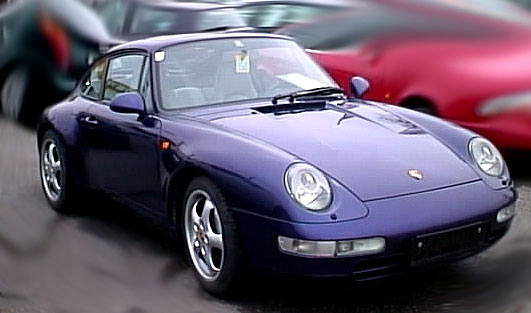

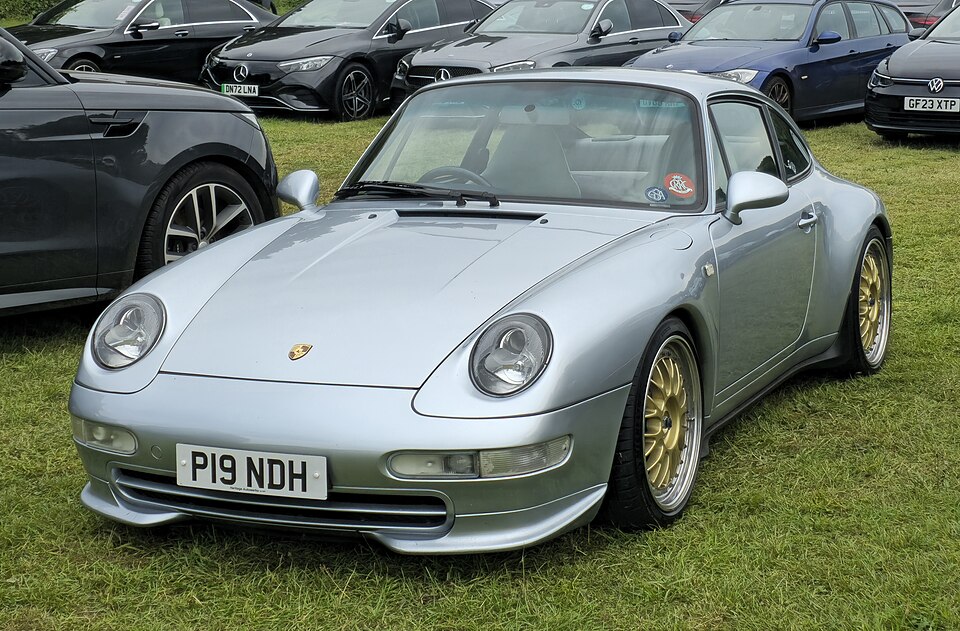

The Carrera is the naturally aspirated, rear-wheel-drive starting point, often called a C2 in enthusiast conversation. The Carrera 4 adds all-wheel drive. Both belong to the narrow-body Carrera family and were offered as coupes and Cabriolets. A regular Carrera 4 is therefore a different proposition from a Carrera 4S, even though both drive all four wheels. Porsche Classic’s model reference.
The Carrera has rear-wheel drive and the narrower body; the Carrera 4 adds a driven front axle without adopting the S and 4S bodywork. The Carrera deserves consideration in its own right. If its proportions are what first attracted you to the 993, there is little reason to replace that preference with someone else’s hierarchy. Start with the car you want to use, then compare documented examples. The same applies to the Carrera 4: all-wheel drive may be part of your brief, but tire condition, suspension setup and maintenance still need their own assessment.
Try to drive candidates on similar roads and in comparable conditions. An old set of tires, tired dampers or a poor alignment can influence your impression of a particular car. Ask the inspector to explain those findings before deciding that a behavior belongs to every example of the variant.
Cabriolet and Targa
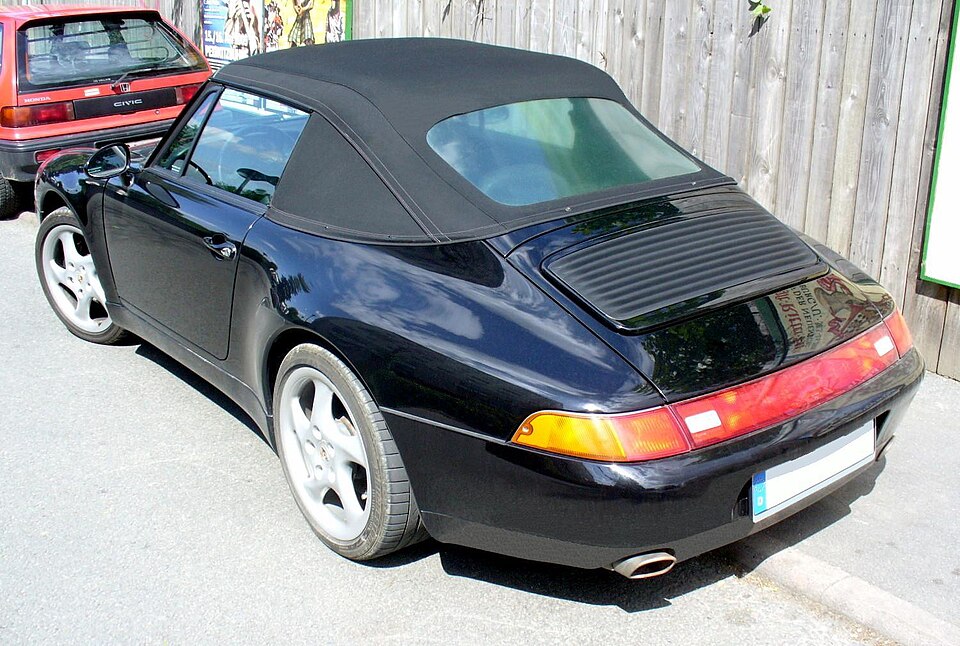

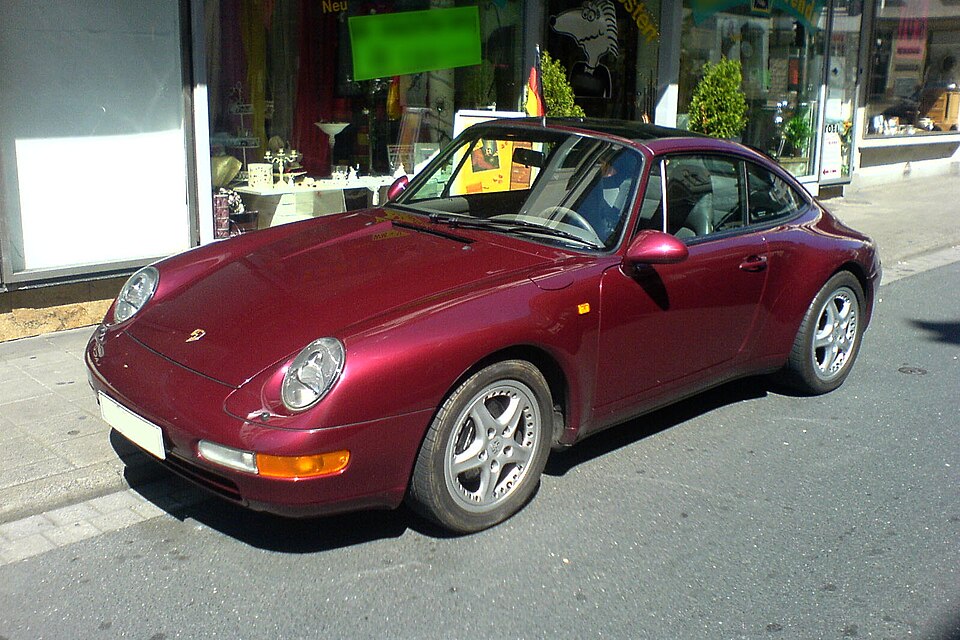

The Cabriolet supplies the full open-roof experience. The 993 Targa takes a different approach: a large glass panel slides beneath the rear glass, replacing the removable roof arrangement familiar from earlier Targas. Porsche introduced this configuration for model year 1996. The Targa is rear-wheel drive; the glass roof does not make it a Carrera 4. Porsche Classic and PCA’s discussion of the Carrera variants.
Choose between them by spending time in the cabin with the roof open and closed. Think about sunlight, wind, noise, headroom and where you will keep the car. A coupe with a sunroof is another option, but it should not be confused with the Targa’s glass-roof design.
During inspection, request a complete demonstration of the roof, blind where fitted, seals and drainage. Look for evidence of water entry and ask for invoices supporting previous repairs. The right question is what this mechanism needs today, with a realistic estimate from a workshop familiar with it.
Carrera S and 4S
.jpg)
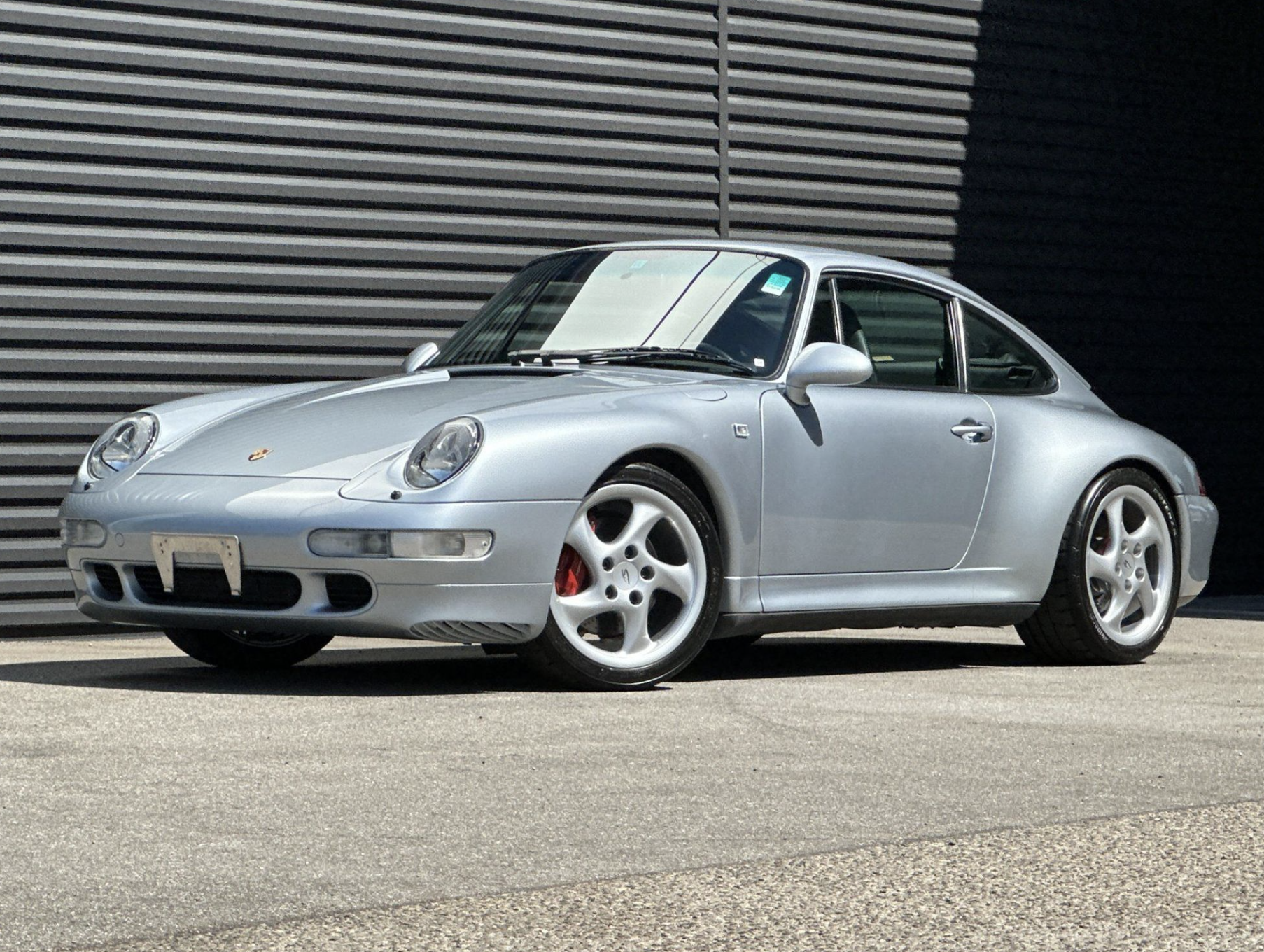
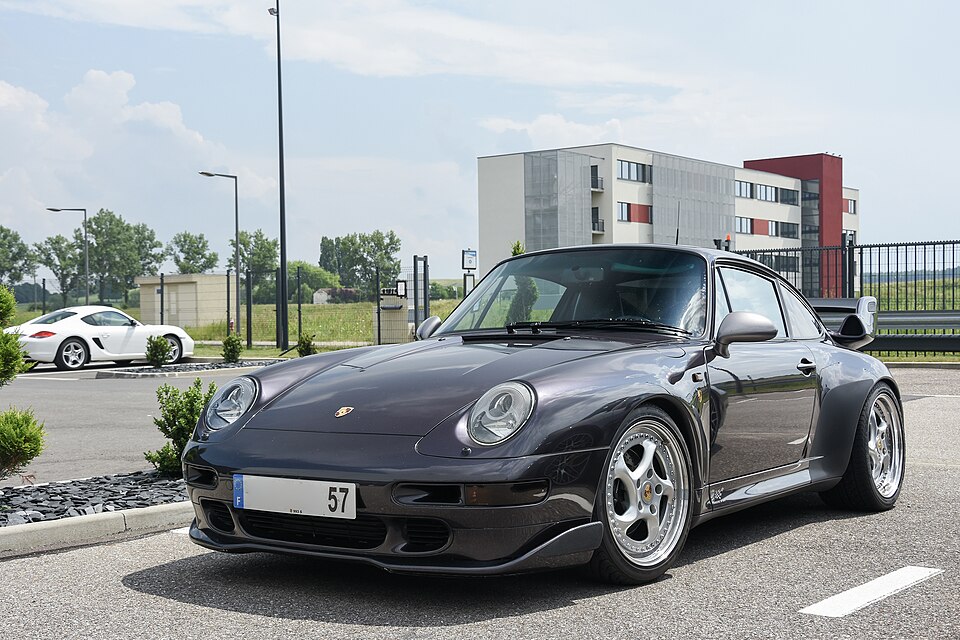
The Carrera S combines rear-wheel drive with the wider Turbo-style body. The Carrera 4S combines that shape with all-wheel drive. Both are coupes with a naturally aspirated 3.6-liter Carrera engine and a retracting rear spoiler. The S badge here does not mean a larger engine or turbocharging. The S has a distinctive divided rear grille. Porsche’s model chronology places the 4S at model year 1996 and the S at 1997. Enthusiasts also call the rear-wheel-drive S a C2S or 2S. Porsche Classic’s identification guide.
The 4S also carries Turbo-derived chassis equipment and larger Turbo brakes, widely known as Big Reds. The standard Carrera S retains the Carrera brake specification. This makes the distinction more substantial than the driven wheels alone. Period tests document the Carrera 4S package and the Carrera S specification.
Color is a poor way to authenticate mechanical parts. Calipers can be painted, grilles changed and suspension replaced. Have an inspector establish the hardware actually fitted and compare it with the factory specification. Read our Carrera S versus Carrera 4S article for the narrow-body, wide-body and brake differences in more detail.
Turbo and Turbo S
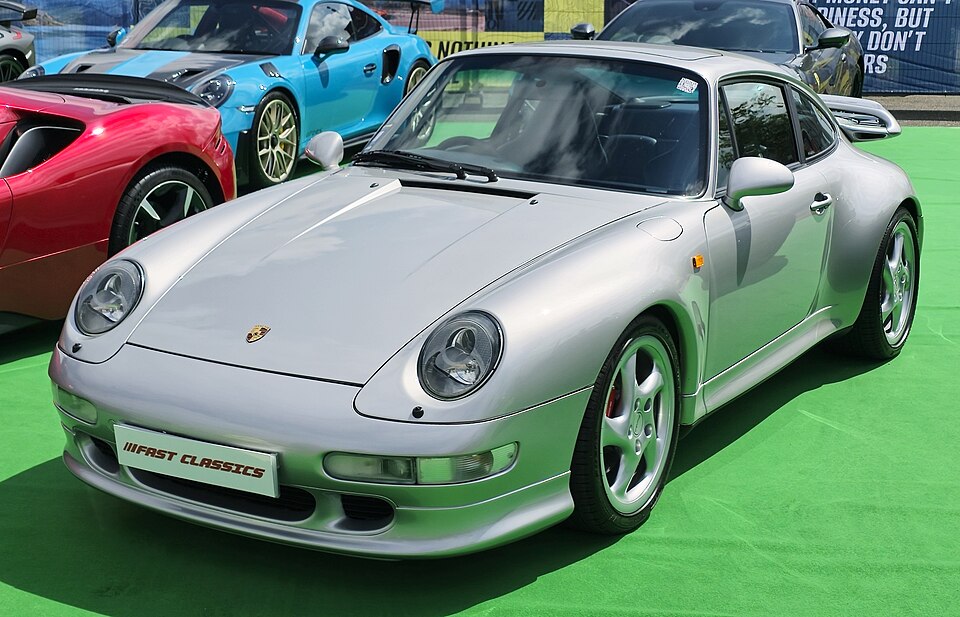

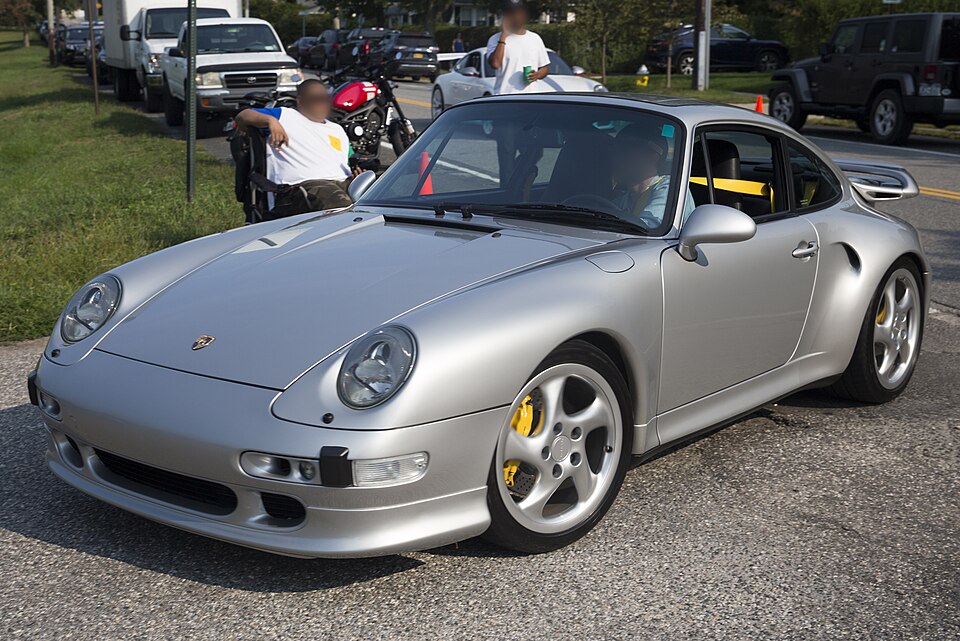

The 993 Turbo combines a 3.6-liter twin-turbo engine with all-wheel drive. Its fixed rear wing and broad body announce a different version of the 993, with greater performance and additional equipment to understand. The later Turbo S adds a factory performance package, distinctive rear-quarter air intakes and extensive special trim. Porsche’s account of the Turbo S’s development describes the 993’s place in that lineage.
Keep a Turbo, a Turbo with a documented factory power upgrade, and a factory Turbo S separate when researching. Modifications can also resemble factory equipment. Request the original specification, invoices and a clear account of subsequent work before attaching significance to a badge or quoted power figure. Market-specific specifications deserve attention too; a number taken from one country’s brochure should not automatically be applied to every car.
A Turbo shortlist calls for an inspection brief tailored to that model. Ask the workshop what it will examine beyond the general 993 checks and how it will document the engine, boost system, drivetrain and any modifications. Establish the cost of unresolved issues before treating a recent service invoice as a complete answer.
Carrera RS and GT2
.jpg)
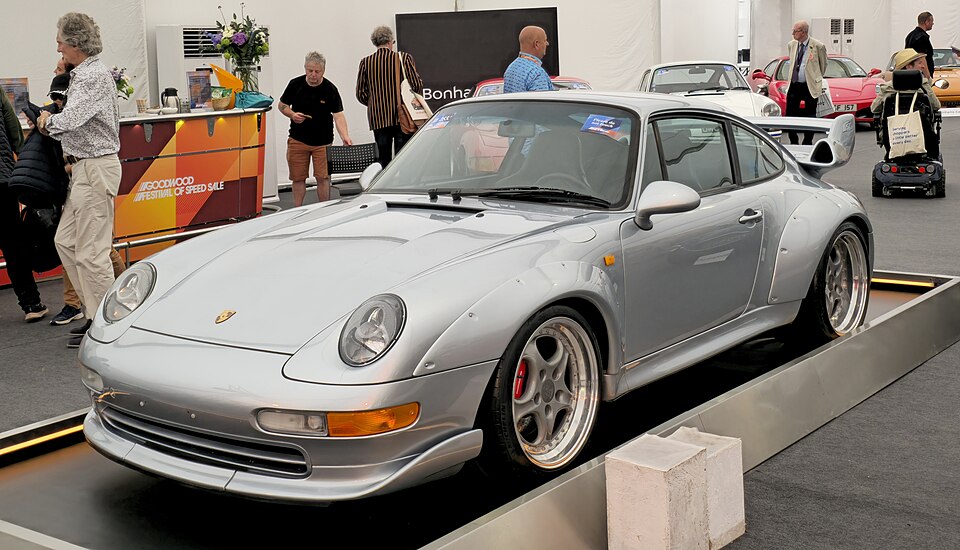

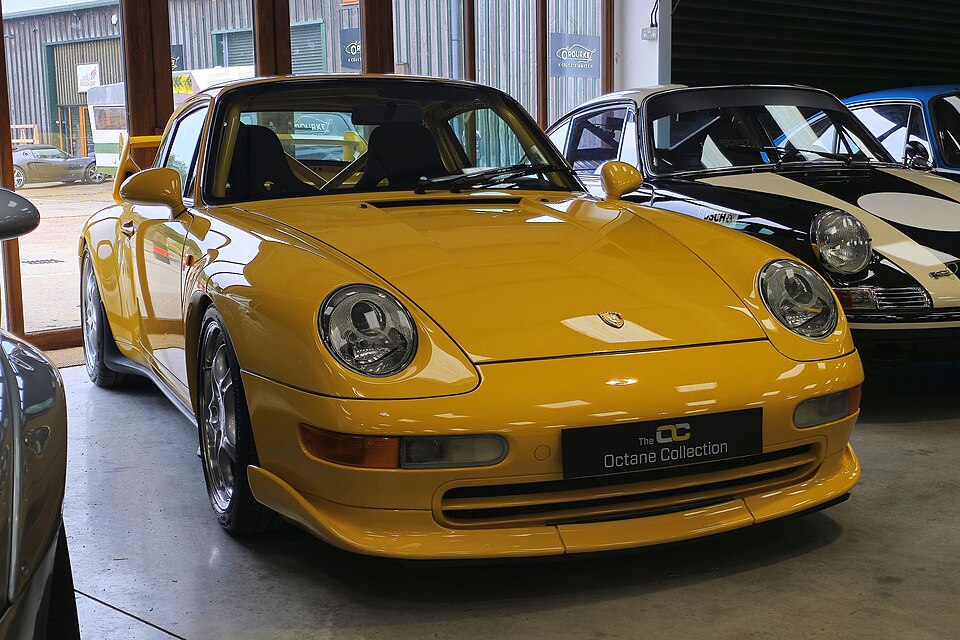
The Carrera RS takes the naturally aspirated route toward a more focused car. Porsche identifies a 3.8-liter engine producing 300 PS and a substantial weight reduction compared with the regular Carrera. That engineering brief is central to the RS’s identity. Porsche’s 993 retrospective.
The GT2 follows a different path: twin-turbo power, rear-wheel drive and a motorsport-led specification. Porsche’s history explains the removal of the Turbo’s driven front axle, weight-saving measures, prominent wing and replaceable wheel-arch extensions. Road, Clubsport and competition versions require careful identification. Porsche’s GT2 history.
These searches require more than a checklist of recognizable parts. An RS-style wing or GT2-style body conversion does not authenticate the model beneath it. Bring a specialist into the process early to examine identity, factory configuration, repairs and any competition history. Decide whether you want a preserved road car, a documented competition car or a modified car to use; each deserves a different conversation.
Model years and VarioRam
For U.S.-market Carrera shopping, the useful first distinction is 1995 versus 1996–1998. The earlier engine has the simpler intake arrangement; the later VarioRam system changes the effective intake length to improve torque delivery. It is an engine specification change, separate from choosing a narrow or wide body. Porsche describes the mechanism in its 993 technical history.
U.S. Carrera models also move from OBD-I to OBD-II diagnostics for 1996. That pairing should not be assumed for every European-market car: VarioRam and the U.S. diagnostic specification are different things. PCA discusses that distinction in its model-year comparison. Have a specialist identify the actual engine and diagnostic equipment, particularly when comparing imports.
Model year, assembly date and first registration are separate entries in a car’s history. A late registration does not establish a later engine, and a replacement grille or third brake light does not settle the question either. For an imported example, confirm registration and inspection requirements with the relevant authority before committing to the purchase.
Engines and transmissions
Porsche’s European Carrera figures move from 272 PS to 285 PS with VarioRam, and its records also identify an optional 3.8-liter power upgrade. These are factory reference figures, not measurements of an individual used engine, and PS should not be casually relabeled as U.S. horsepower. Porsche’s engine overview.
The six-speed manual has a clutch pedal; the available four-speed Tiptronic is a conventional automatic with manual gear selection. It is not a later PDK dual-clutch transmission. They give different ownership experiences. Availability depends on the variant: the rear-wheel-drive Carrera family includes Tiptronic choices, while all-wheel-drive 993s use the manual. PCA’s model discussion is helpful when building that shortlist. Try the transmission that interests you in ordinary traffic as well as on an open road.
A seller’s description of a 3.8 conversion, replacement engine or factory power package should lead to a request for supporting records. Write down what the car was built with, what has changed and who did the work. That account is more useful than a single headline power claim.
A little more clarity
Common questions
Is the 993 Carrera S the same as a Carrera 4S?
No. Both have wide bodywork and a naturally aspirated Carrera engine. The S is rear-wheel drive; the 4S adds all-wheel drive and larger Turbo-derived brakes.
Does a 993 Targa have a removable roof panel?
The 993 Targa uses an electrically operated sliding glass roof. It differs from the removable-panel Targas of earlier 911 generations.
Does VarioRam always mean OBD-II?
No. Engine intake specification and diagnostic equipment depend on the original market and model year. Have the particular car’s configuration verified, especially when considering an import.
Options and ownership
Roof configuration, seats, suspension and color can make a familiar model feel very personal. Establish factory equipment from the car’s records and compare it with what remains fitted. For a car described as having M030 suspension, sports seats or a slick top, ask the inspector to verify the exact specification. Equipment and terminology varied by original market; avoid assuming that a feature means the same thing in every listing. A sunroof-delete coupe, often called a slicktop, remains a coupe. Sport seats or an aerodynamics package do not turn a Carrera into an RS. For suspension, ask whether the car has its original components, replacement factory parts or an aftermarket setup.
Treat a rare color, including Vesuvio, as the beginning of the research. Paint specification, a special trim combination and membership of a particular limited series are separate claims. Ask for evidence connecting each claim to the chassis, and decide which details matter enough to constrain your search.
Leave room in the brief for a well-documented car you had not expected to like. A viewing may change your opinion of a color or roof configuration. It should also give you a clearer understanding of the records, current condition and work you would take on. Our 993 Carrera buyer’s guide develops that inspection process, while reading the history file helps organize the evidence.
Sources and further viewing
This guide was written for The Analog Stable using Porsche’s model records and the references linked throughout. The Porsche Club of America’s “Porsche 993 Model Guide: Everything you need to know” informed the Carrera research; our Turbo, RS and GT2 coverage draws on the separate Porsche references. We reviewed the video transcript, with technical names and facts checked against other sources where available.
Continue with the 993 model overview, our S and 4S comparison, or set your 993 search criteria.
The comparisons and buying framework are our editorial synthesis. We have not road-tested every variant or inspected a car offered for sale. Use this guide to prepare a shortlist, then have the particular car examined by a qualified specialist. Updated October 4, 2026.